Local Honey: Where to Buy It in Angus, Perthshire and Dundee
If you live around Dundee, Angus or Perthshire, some of the best honey you can buy is made a few miles from your door. Our bees forage on the blossom around our farm on the edge of Dundee and on the heather of the Angus Glens and Perthshire. Here’s what “local honey” really means, where to buy ours, and how to tell whether any jar of honey is as local as it looks.
What counts as local honey?
There’s no legal definition of “local” honey in the UK. It simply means honey made by bees kept near where you live, by a beekeeper you could, in principle, go and meet.
What the law does fix is where honey comes from. Every jar has to say which country the honey was harvested in, and honey that names a place, such as Scottish honey, has to come entirely from there. So “local” is the beekeeper’s promise, but the place on the label is one the rules hold them to. Our post on what honey labels really mean explains the rest.
Where our honey comes from
We’re a family farm at Star Inn Farm, Invergowrie, on the western edge of Dundee, where Angus and Perthshire meet. We started keeping bees in 2018 with six hives, and today we look after over 500 across Scotland.
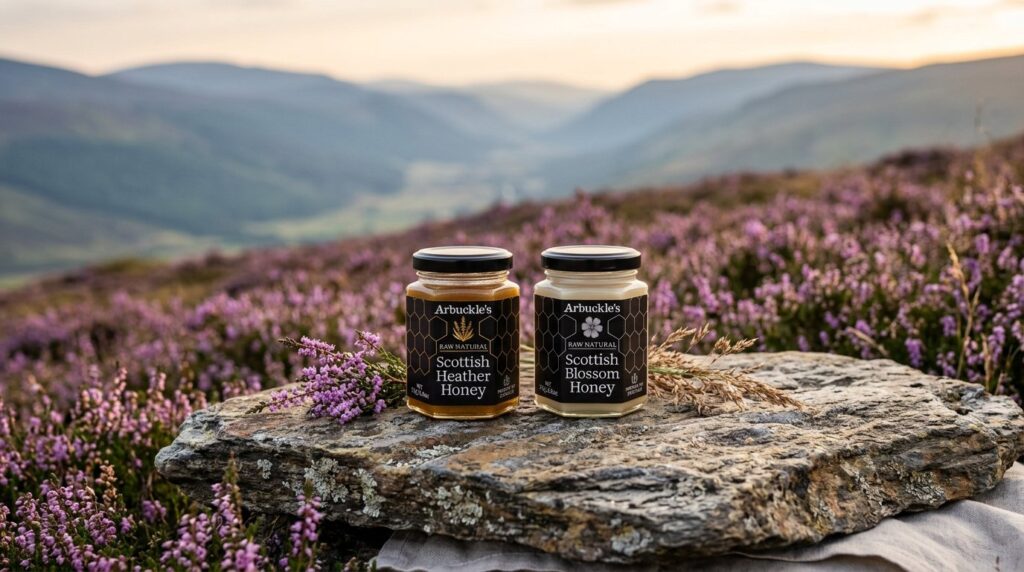
- Blossom honey comes from the hives around our farm. The bees make it in spring from the wildflowers and blossom nearby, so if you live in or around Dundee, this is about as local as honey gets. It’s pale, mild and floral.
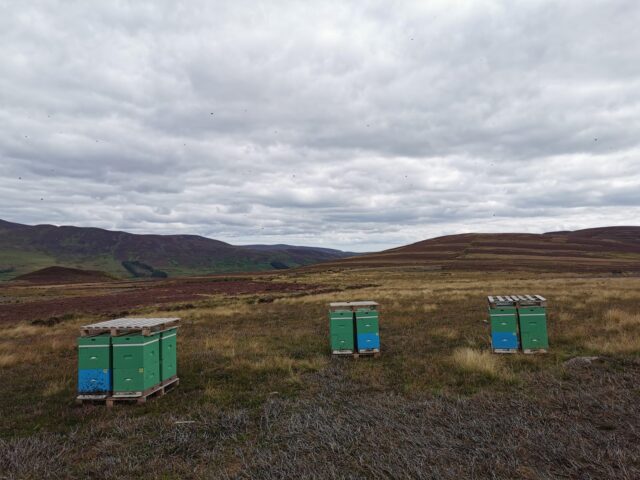
- Heather honey comes from our hives on the heather moors of Glen Clova and Glen Isla in the Angus Glens, and around Dunkeld in Perthshire. We harvest it in late August. It’s dark, smoky and rich. Read the full story in our guide to Scottish heather honey.
- Heather honeycomb comes from the same heather hives. We cut it by hand ourselves over the winter. Our guide to raw honeycomb explains how to eat it.
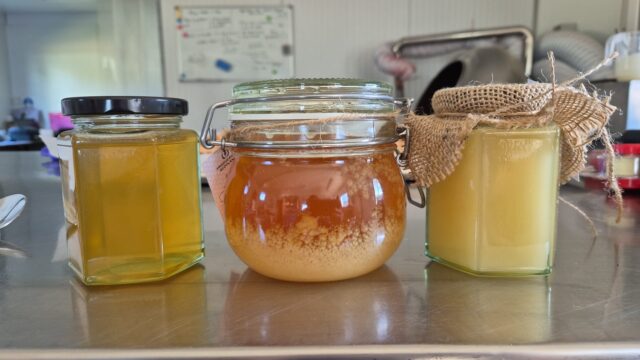
All of it is raw: spun or pressed from the comb, coarse-sieved and never heat-treated or finely filtered. Our post what is raw honey? explains what that means.
Where to buy our local honey
Online, all year round
You can order all of our honey from our honey shop:
- Raw Scottish blossom honey, from the hives around our farm
- Raw Scottish heather honey, from the Angus Glens and Perthshire
- Raw heather honeycomb, cut by hand on the farm
We aim to send orders out within 24 hours on weekdays, and delivery is free on orders over £40. The delivery information page has the details.
At our farm shop, from May
Our farm shop is seasonal. It opens when our fresh fruit is ready, usually in the first week of May, and closes in September, so it’s closed for now. When it’s open, you’ll find all our honeys there alongside the fruit. Check our contact page for the address and opening times before you visit.
Finding other local honey near you
Wherever you live, the best local honey usually comes straight from the people who keep the bees:
- Farm shops, especially farms that keep their own hives.
- Farmers’ markets, where you can often talk to the beekeeper.
- Local beekeepers, many of whom sell honey from home or at the garden gate.
- Independent delis and village shops, which often stock honey from nearby hives.
Whoever you buy from, a few questions tell you a lot. Where are the hives? When was the honey harvested? How was it taken out of the comb, and has it been heated or finely filtered? A good beekeeper will be happy to tell you.
How to tell if honey is really local
Turn the jar round and check:
- The country of origin. It must be on the label. A “blend of honeys from more than one country” can’t be local.
- A place name. “Scottish honey” or a named glen or county is a claim the rules hold the producer to.
- A named producer. A farm or beekeeper’s name and address means you can find out more.
- How it was made. Words such as “raw” or “never heat-treated” tell you about the processing, though they aren’t legal terms on their own.
Local honey FAQs
Is local honey better than supermarket honey?
It’s different. Local honey usually comes from one beekeeper’s hives, so you know where and when it was made, and each batch tastes of the flowers nearby. Supermarket honey is often a blend from several countries, made to taste the same in every jar.
Does local honey help with hay fever?
We can’t say it does. There’s no authorised health claim for honey in the UK, so we never make health claims about ours. We’d encourage you to buy local honey for its flavour and because you know where it came from.
Can you buy honey direct from the farm?
Yes, at our farm shop when it’s open, from early May to September. The rest of the year, you can order online and we’ll post it to you.
Is your honey organic?
No. Our honey isn’t certified organic. It does come from our own hives, kept with chemical-free beekeeping, and nothing is added to it.
Can babies have local honey?
No. The NHS advises that babies under 12 months shouldn’t be given any honey, however local.