Why British Single-Origin Honey Is Worth Seeking Out
A lot of the honey on supermarket shelves is a blend: honey from several countries, mixed so that every jar looks and tastes the same. There’s nothing wrong with that, but it’s a very different thing from honey made by one beekeeper’s bees, in one place, in one season. Here’s what single-origin honey means, why British honey made that way tastes of where it came from, and how to find it.
What does single-origin honey mean?
Single-origin honey comes from one place. Usually that means one beekeeper’s hives, in one area, from one harvest. A blend is the opposite: honey from different places, often different countries, mixed together.
“Single origin” isn’t a legal term, so it’s the producer’s description. What the law does require is that every jar shows where the honey was harvested. If it comes from more than one country, the label says so, with wording such as “blend of honeys from more than one country”. Our post on what the words on a honey label really mean goes through the rules.
Why one place makes a difference
It tastes of where it was made
Bees make honey from the nectar of whatever is flowering within reach of the hive, so honey carries the taste of its landscape. Our two honeys show it clearly:
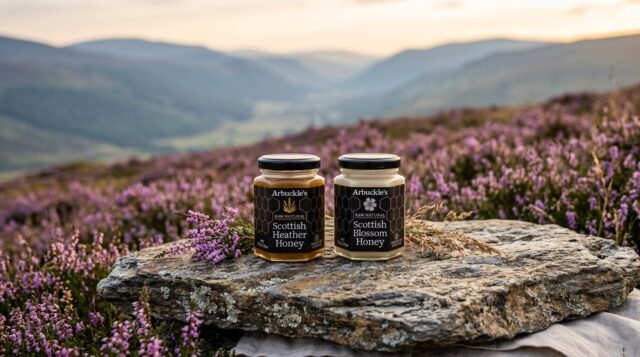
- Blossom honey comes from the spring flowers and blossom around our farm near Dundee. It’s pale, mild and floral.
- Heather honey comes from the late-summer heather of Glen Clova, Glen Isla and around Dunkeld. It’s dark, smoky and rich, and sets like a soft jelly. Our guide to Scottish heather honey explains why.
Same bees, same beekeepers, completely different honey. Blend the two and you’d lose what makes each one special. Blend honey from a dozen countries and you get something consistent, but without a sense of place.
It changes with the seasons
Single-origin honey isn’t the same every year, and that’s part of its charm. A warm, dry spring or a wet August changes what flowers and how much nectar the bees bring home. Heather honey in particular can vary from golden to deep amber from one season to the next.
You know who made it
With a single-origin honey, you can find out exactly where it came from and how it was made. A named British producer means you can ask where the hives are, when the honey was harvested, and whether it’s been heated or finely filtered. With a multi-country blend, those questions are much harder to answer.
What makes British honey different
Britain’s honey is shaped by its weather and its flowers. The season is short, the summers are cool, and the main nectar flows come from spring blossom, summer wildflowers and, in Scotland, the heather moors. That’s why British honeys tend to be varied, often small-batch, and very different from region to region.
Scottish heather honey is one of the most distinctive of them all. Heather flowers late, on the moors, for only a few weeks, so heather honey is the last crop of the year and the beekeeper has to take the hives up to the moors to make it.
How to find good British single-origin honey
Turn the jar round and look for:
- A single country of origin. “Produce of Scotland”, “United Kingdom” or similar, rather than a blend wording.
- A place or a flower. Names like “Scottish”, “heather” or a named county or glen are claims the rules hold the producer to.
- A named producer. A farm or beekeeper you can look up.
- How it was made. “Raw” and “never heat-treated” tell you about the processing. Our post what is raw honey? explains what to look for.
Farm shops, farmers’ markets and beekeepers are the best places to start. If you live around Dundee, Angus or Perthshire, our post on where to buy local honey has more ideas.
Our single-origin Scottish honey
Every jar of our honey comes from our own hives in Scotland. We’ve kept bees since 2018, starting with six hives, and today we look after over 500. We never blend in honey from anywhere else.
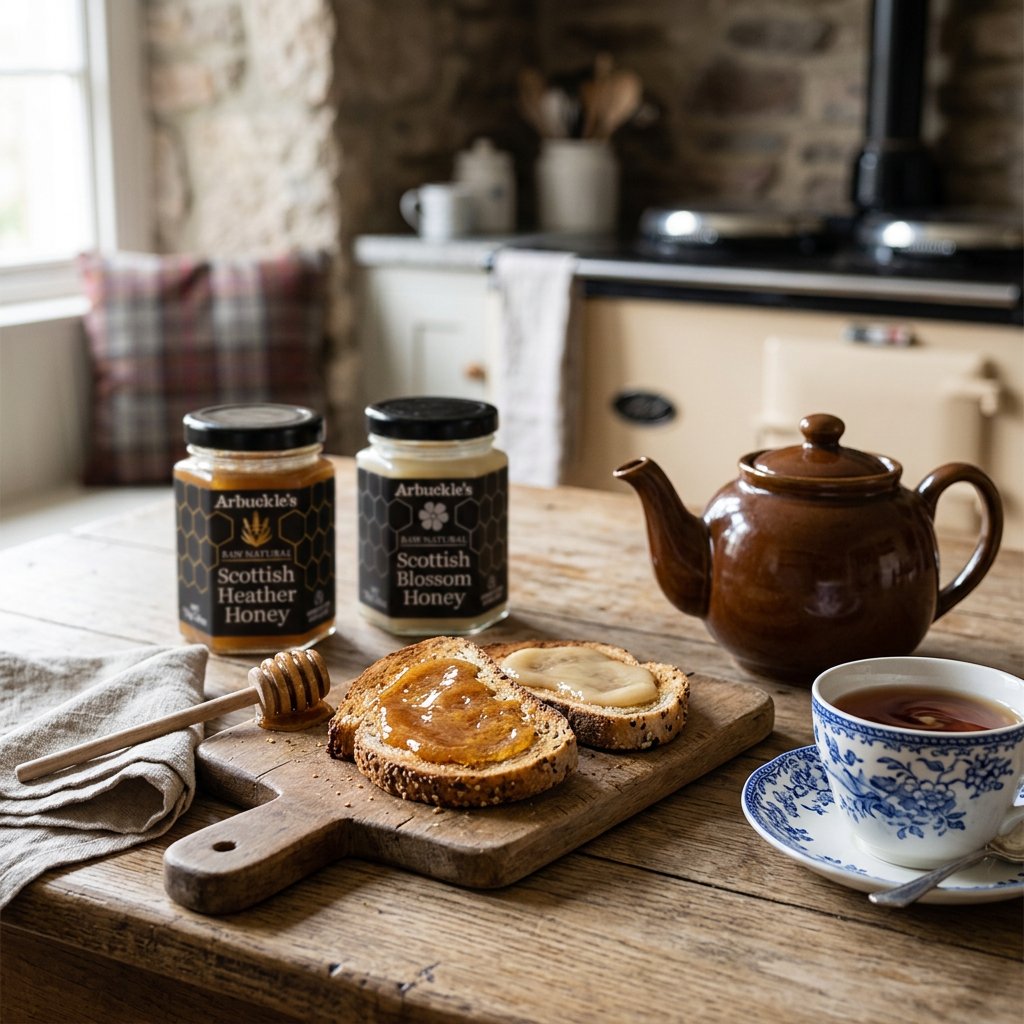
- Raw Scottish blossom honey, our spring crop from the hives around the farm
- Raw Scottish heather honey, our late-summer crop from the heather moors
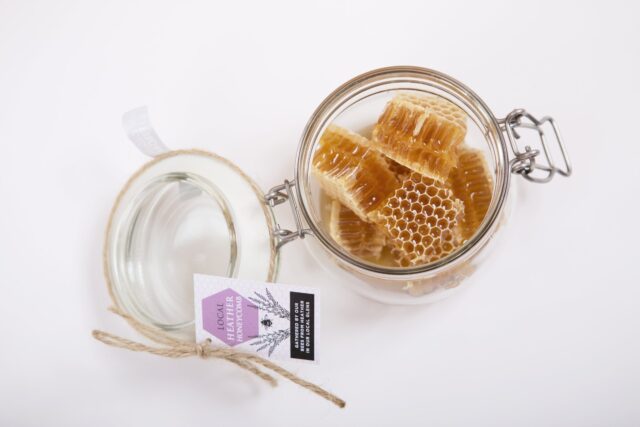
- Raw heather honeycomb, honey just as the bees left it
Can’t decide? Our honey gift sets let you taste blossom and heather side by side. See the whole range in our honey shop.
British honey FAQs
What is the best British honey?
It depends on what you like. Mild, floral honeys suit everyday use, while strong honeys like Scottish heather honey are best enjoyed on their own, on toast or with cheese. The best way to choose is to try a few single-origin honeys from different places.
Is single-origin honey the same as raw honey?
No. Single-origin is about where the honey comes from. Raw is about how it was processed. A honey can be one, both or neither. Ours is both.
Why is British honey more expensive than supermarket blends?
British honey is usually made in small batches by beekeepers working with a short season and unpredictable weather. Blends are made in large volumes from wherever honey is cheapest that year.
Is your honey organic?
No. Our honey isn’t certified organic. It does come from our own hives, kept with chemical-free beekeeping, and nothing is added to it.
Can babies have honey?
No. The NHS advises that babies under 12 months shouldn’t be given any honey.