How to Choose a Good Honey in the UK
There’s no single best honey. A mild, floral honey that’s perfect in a cup of tea would be lost on a cheeseboard, and a strong, smoky one might overpower a cake. The best honey is the one that suits how you’ll use it, made by someone who can tell you where it came from. Here’s how to choose, from beekeepers who taste a lot of it.
Start with how you’ll use it
For tea, baking and everyday spreading
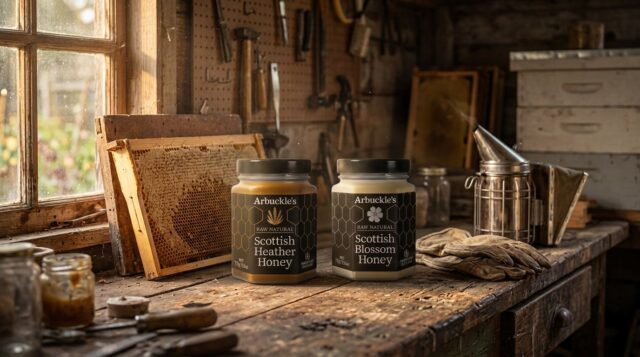
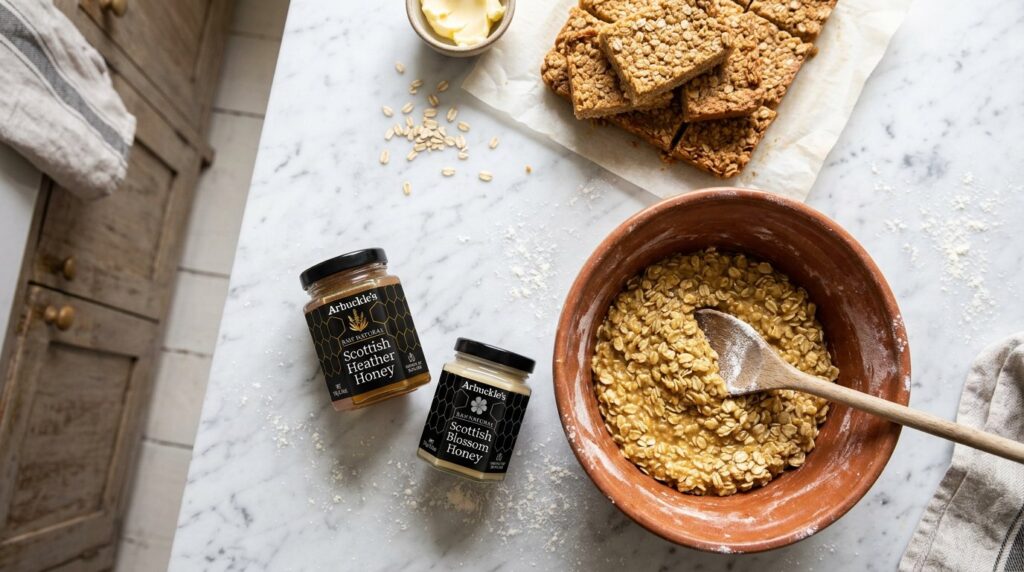
Choose a mild, floral honey. It sweetens without taking over, so the flavour of your tea, porridge or bake still comes through. Our raw Scottish blossom honey, made in spring from the blossom around our farm, is pale, mild and floral, and it’s the one most of us reach for every day.
For toast, cheese and porridge
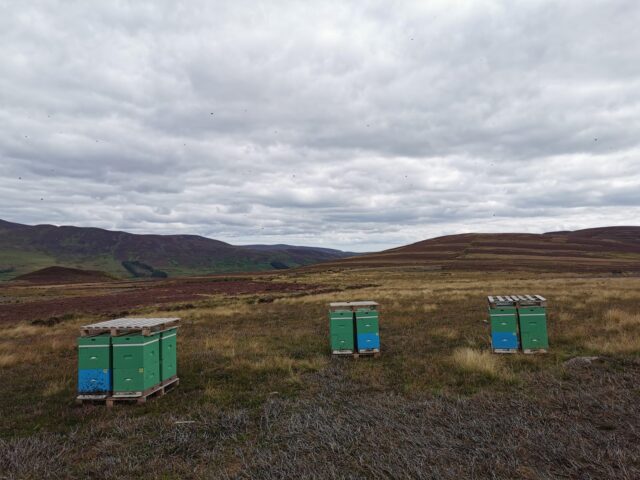
Choose a strong honey with character. Our raw Scottish heather honey is dark, smoky and rich, and it’s at its best where you can really taste it: on hot buttered toast, drizzled over porridge, or next to a strong cheese. Our guide to Scottish heather honey has more ways to enjoy it.
For a treat or a cheeseboard centrepiece
Choose honeycomb. It’s honey exactly as the bees left it, sealed in the wax, and it looks wonderful on a board. Our raw heather honeycomb is cut by hand on the farm, and our guide to raw honeycomb explains how to serve it.
For something different
Try a fruit honey. Our blossom honey with honeyberries, raspberries or strawberries starts with our blossom honey, which we cream until it’s smooth and then blend with freeze-dried fruit from our own farm. It’s lovely on pancakes, yoghurt or scones.
Runny or set?
Some honeys are runny and some are set, and neither is better. It depends on how you like to use it. Runny honey is easy to drizzle and stir into drinks. Set honey spreads without dripping off your toast.
Raw honey usually sets on its own over time. Our blossom honey is runny when we jar it and starts to set after two to three weeks, which is completely natural. If you’d like it runny again, stand the jar in warm water (no hotter than 35°C) for 15 to 20 minutes.
Five signs of a good honey
Whatever kind you choose, these are worth checking:
- It says where it’s from. Every honey label must show the country of origin. A single named country, region or producer tells you far more than a “blend of honeys from more than one country”. Our post on British single-origin honey explains why that matters.
- It names who made it. A farm or beekeeper you can look up, and ask questions of, is a good sign.
- It tells you how it was made. “Raw” and “never heat-treated” mean the honey has been handled as little as possible. Our post what is raw honey? explains what to look for, and our guide to what the words on a honey label really mean decodes the rest.
- It tastes of something. Good honey has a flavour of its own, from the flowers the bees visited. If every jar you try tastes the same, you’re probably tasting blends.
- It’s allowed to set. Honey that crystallises over time is behaving naturally. Setting isn’t a sign that anything is wrong.
Choosing the right size
If you’re trying a honey for the first time, start with a small jar. Once you’ve found one you love, a bigger jar is better value and keeps for a long time in the cupboard. Our honeys come in jars from 75g up to 1.3kg, and you’ll find them all in our honey shop.
Honey buying FAQs
What is the best honey to buy in the UK?
The one that suits how you’ll use it, from a producer who tells you where and how it was made. For everyday use, a mild single-origin honey such as blossom honey is a good start. For flavour, try a strong one such as Scottish heather honey.
What is the best raw honey?
Look for raw honey with a named place and producer, that’s never been heat-treated or finely filtered. Taste a few and pick the flavour you like best.
Is more expensive honey better?
Not always, but price often reflects how it’s made. Single-origin honey from a small producer costs more to make than a large blend, and some honeys, like heather honey, are harder to harvest.
Does honey go off?
Honey keeps for a very long time when it’s sealed and stored at room temperature. The best before date on the jar is a guide, and setting is normal.
Can babies have honey?
No. The NHS advises that babies under 12 months shouldn’t be given any honey.