What Is Raw Honey? A Guide from Our Scottish Farm
“Raw” is printed on more and more honey jars, but it’s not always clear what it means. We’ve kept bees since 2018, starting with six hives and honey just for ourselves, and today we look after over 500 hives across Scotland. Here’s what raw honey is, how it differs from most supermarket honey, and how to tell what you’re buying.
What is raw honey?
Raw honey is honey that’s been taken from the hive and put in a jar with as little done to it as possible. It isn’t heat-treated or pasteurised, and it isn’t finely filtered. At most it’s warmed very gently to help it into the jar. What you get is what the bees made: the honey itself, plus tiny traces of pollen and beeswax from the comb.
There’s no legal definition of “raw” honey in the UK, so the word on its own doesn’t guarantee much. That’s why it’s worth knowing who made your honey and how.
How is raw honey different from supermarket honey?
Most honey on supermarket shelves has been processed so that it looks the same in every jar and stays runny for as long as possible:
- It’s heated. Warming honey makes it easier to pump and bottle, and slows down crystallisation.
- It’s finely filtered. This removes the pollen and wax, so the honey looks perfectly clear.
- It’s often blended. Labels such as “blend of EU and non-EU honeys” or “blend of honey from more than one country” mean the honey has come from several countries.
None of this makes it unsafe. It’s still honey. But heating and filtering change the flavour and texture, and blending means you can’t tell where it came from.
Raw honey is less uniform. Each batch tastes a little different depending on the flowers, the weather and the time of year. We think that’s the best thing about it.
Raw, pure, natural, real: what’s the difference?
You’ll see all of these words on honey labels:
- Pure honey and 100% pure honey: by law, anything sold as honey in the UK must be just honey, with nothing added. So “pure” doesn’t tell you much more than the word “honey” does.
- Natural honey and real honey: marketing words with no fixed meaning.
- Raw honey: tells you about the processing. It should mean not heat-treated, unpasteurised and not finely filtered.
- Unpasteurised honey: honey that hasn’t been heat-treated. Raw honey is always unpasteurised.
We’ll look at these labels in more detail in a later post.
How we make our raw honey
We produce two raw honeys, from two very different places.
Blossom honey is our first crop of the year. Our bees make it in spring from the wildflowers and blossom around our farm on the outskirts of Dundee. We spin it gently out of the comb in an extractor and pass it through a coarse sieve to catch any bits of wax. The only warmth it ever sees is a gentle warming, always below 40°C, to help it flow into the jars. It’s pale gold, mild and floral, runny when we jar it, and it sets naturally in the jar.
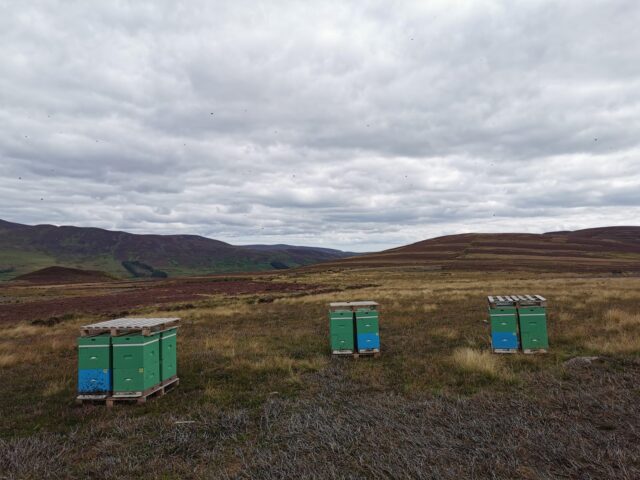
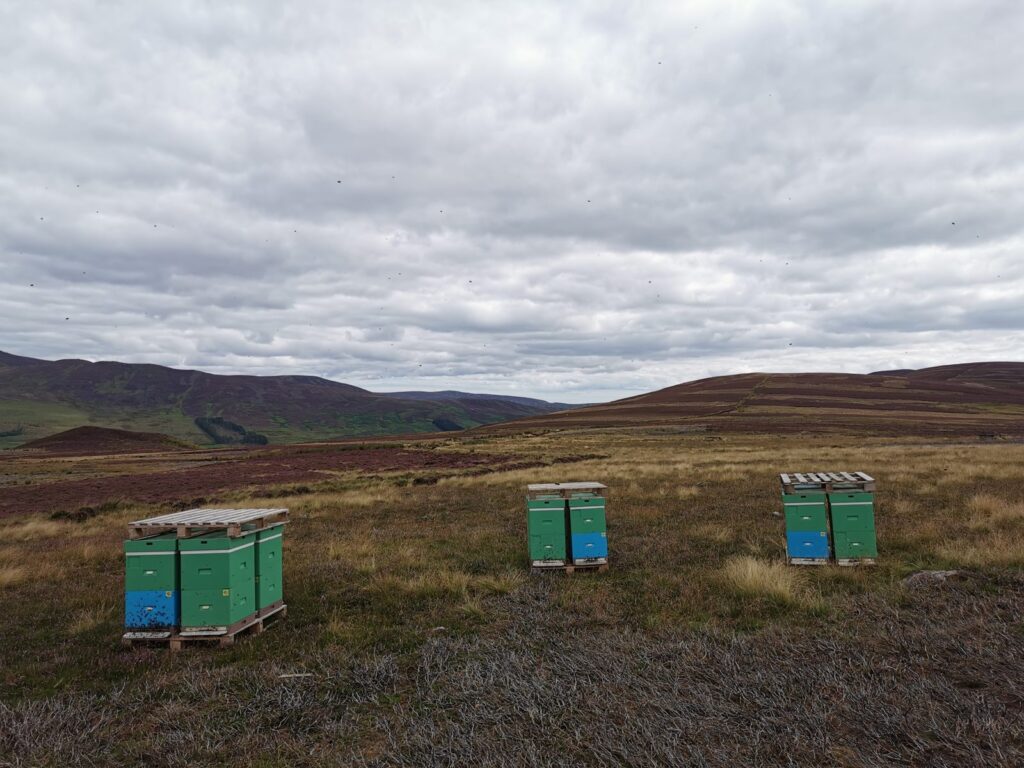
Heather honey is our last crop of the year. Our hives spend the summer on the heather moors of Glen Clova and Glen Isla in the Angus Glens, and around Dunkeld in Perthshire, and we harvest in late August. Heather honey is too thick to spin, so we gently press it from the comb instead. It’s dark amber, with a smoky, rich flavour. Our guide to Scottish heather honey tells the whole story.
Both honeys come from our own hives, kept with chemical-free beekeeping, and neither is ever heat-treated, pasteurised or finely filtered.
What does raw honey look and taste like?
- Cloudy, not crystal clear. The tiny specks of pollen and wax make raw honey look a little cloudy.
- It sets. Raw honey crystallises over time and goes firm and grainy. This is completely natural. Heather honey also sets like a soft jelly and loosens when you stir it.
- Full flavour. Raw honey tastes of the flowers the bees visited, so blossom and heather honey taste completely different.
If your raw honey has set and you’d like it runny again, stand the jar in warm water (no hotter than 35°C) for 15 to 20 minutes.
How to tell if honey is really raw
Turn the jar round and check the label:
- Who made it, and where? A named beekeeper or farm, and a named place, is a good sign.
- Does it say how it was made? Look for “raw”, “unheated” or “unpasteurised”, not just “pure” or “natural”.
- Single origin or blend? “Blend of EU and non-EU honeys” or “blend of honey from more than one country” means the honey has come from several countries.
- Has it set? Raw honey usually crystallises within a few months. Honey that stays perfectly clear and runny for a long time has often been heated or filtered.
Where to buy raw honey in the UK
The best way to buy raw honey is straight from the people who keep the bees: a local beekeeper, a farmers’ market or a farm shop.
You can buy all of our raw honey online:
- Raw Scottish blossom honey, mild and floral
- Raw Scottish heather honey, dark and smoky
- Raw heather honeycomb, honey just as the bees left it
Jars come in sizes up to 1.3kg, and we offer free next-day delivery on orders over £40. You can also pick up any of our honeys at the farm shop when it’s open for the season. See the whole range in our honey shop.
Raw honey FAQs
Is raw honey the same as unpasteurised honey?
Raw honey is always unpasteurised. Not all unpasteurised honey is raw, though, because it may still have been finely filtered or blended.
Does raw honey go off?
Honey keeps for a very long time if it’s sealed and stored at room temperature. The best before date on the jar is a guide. Setting or crystallising is normal and doesn’t mean it has gone off.
Can I cook with raw honey?
Yes. You can bake and cook with it just like any other honey. Heat changes the delicate flavour, so for the full taste of raw honey, add it to food that’s warm rather than hot.
Is your raw honey organic?
Our honey isn’t certified organic. It does come from our own hives, kept with chemical-free beekeeping, and nothing is added to it.
Can babies have raw honey?
No. The NHS advises that babies under 12 months shouldn’t be given any honey, raw or otherwise.
Should I keep raw honey in the fridge?
No. The cold makes it crystallise faster. Keep it in a cupboard at room temperature, with the lid on.